Subscribe
Alert Me when new Data Products are available


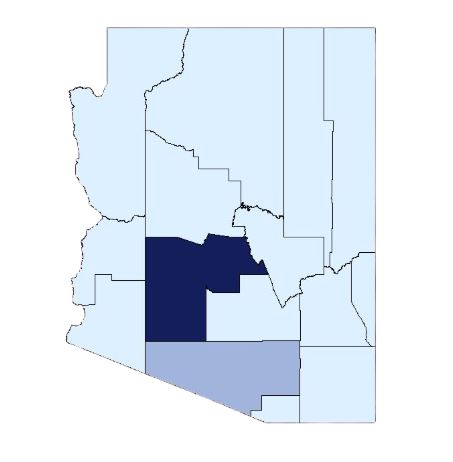
Arizona is one of the fastest-growing states in the United States, with an estimated population of approximately 7.7 million residents in 2026.
Recent population estimates place the state between about 7.69 million and 7.8 million people, although totals vary by source and methodology.
Arizona added more than 67,000 residents between July 2024 and July 2025, representing growth of approximately 0.9%.
Population growth has been fueled largely by domestic migration, employment opportunities, and Arizona’s expanding metropolitan areas.
Phoenix remains the state’s largest population center, while Tucson, Mesa, Chandler, Scottsdale,
and other communities also contribute significantly to statewide growth. Although Arizona continues to attract new residents,
its current growth rate is more moderate than the rapid increases recorded during earlier decades.
Arizona has a diverse population. White residents make up the largest racial group, while Hispanic or Latino residents represent a substantial share of the population.
The state is also home to significant Native American, Black, Asian, and multiracial communities. Arizona’s Native American population
reflects the presence of numerous tribal nations and reservations,
including the Navajo Nation, the largest federally recognized reservation in the United States.
The state’s demographic profile also varies by region. Maricopa County contains most of Arizona’s residents and has experienced extensive suburban and
urban development. Rural counties and northern communities generally have smaller populations, older age structures,
and different economic characteristics. Retirees are especially prominent in areas such as Sun City and parts of southern Arizona,
while younger populations are concentrated around universities and major employment centers.
Overall, Arizona’s demographic trends reflect continued population growth, increasing cultural diversity, and significant regional differences.